
When most people hear "interior design," they might think of picking paint swatches and stylish cushions. But it's so much more than that. At its heart, interior design is the art and science of understanding how we interact with a space—and then shaping that space to make life better.
The Art of Shaping Spaces
Think of a great interior designer as a storyteller. They don’t just fill a room with furniture; they create a narrative. They consider the flow, the mood, and that intangible feeling you get the moment you step inside. It’s all about creating a backdrop for your life that’s not only beautiful but also works for you.
This field is a true blend of two disciplines. On one hand, you have the creative side—the eye for colour, texture, and composition. On the other, you have the science of it: spatial planning, ergonomics, and the psychology of how people interact with their environment. A truly well-designed room feels effortless, but that’s only because every detail has been carefully considered.
More Than Just Making It Pretty
It's a common myth that interior design is just about aesthetics. While making a space look good is definitely part of the job, the real magic happens when a room enhances your wellbeing and simplifies your daily routine. This means a designer digs deep into how you actually live.
For instance, they'll be asking questions like:
- How does it work? Can the layout make your morning routine smoother? Does the kitchen have a natural flow for cooking and gathering? Is your home office truly set up for focus?
- How does it feel? What kind of atmosphere are you trying to create? A calm, serene bedroom? A vibrant, social living room?
- Is it safe and sound? Is there enough light to see properly? Are the materials durable and non-toxic? Can everyone who uses the space access it easily?
A great interior designer creates a space that feels like an extension of you. It's not about stuffing a room with trendy objects; it’s about crafting an environment that tells your story and genuinely improves your quality of life.
A Growing Creative Industry
The value of a well-designed space is getting more attention, especially in places buzzing with new development. Take the Middle East, for example, where the demand for thoughtful, innovative environments is booming. The interior design market there was valued at around USD 25 billion and is projected to hit USD 35 billion by 2031.
This surge is fuelled by new construction and a growing desire for interiors that respect cultural heritage while embracing modern living. It shows just how much people are seeking out professional design to create spaces that are both stunning and highly functional. You can find more insights on the Middle East interior design market from 6wresearch.com.
The Seven Timeless Principles of Great Design
Ever walked into a room and felt it was just right? Chances are, it wasn’t an accident. Every beautiful, cohesive space you’ve ever admired follows a set of foundational principles. These aren't strict rules to memorise, but rather the essential tools designers use to create spaces that feel balanced, functional, and inviting.
Think of them as the key ingredients in a recipe. When you combine them correctly, you get something truly special. Let's break down these seven core ideas that form the backbone of all great interior design.
Finding Balance in Your Space
At its heart, balance is about creating a sense of visual equilibrium. It’s what makes a room feel stable and grounded rather than chaotic. Imagine a classic seesaw—to keep it level, you need to distribute the weight evenly. In design, we do the same thing with "visual weight," which is how heavy an object appears based on its size, colour, or texture.
There are three main ways to play with balance:
- Symmetrical Balance: This is the most traditional approach, creating a mirror image on either side of a central line. Picture a fireplace with identical armchairs on each side. It’s formal, orderly, and creates a powerful sense of calm.
- Asymmetrical Balance: This is where things get a bit more interesting. You're still aiming for equilibrium, but you achieve it using different objects that have a similar visual pull. For example, a large sofa on one side can be balanced by two smaller chairs and a floor lamp on the other. This feels more casual, dynamic, and modern.
- Radial Balance: This type of balance radiates outward from a central point, like the spokes on a wheel. Think of a round dining table with chairs arranged around it. It’s a fantastic way to create a natural focal point and encourage social interaction.
Creating Rhythm and Flow
Rhythm is the secret sauce that guides your eye through a space. It’s a visual pattern that creates a sense of movement and connection, preventing the room from feeling like a random collection of stuff. Just like a good song has a beat, a well-designed room has a rhythm that pulls you in.
The easiest way to create rhythm is through repetition—using a specific colour, shape, or pattern in multiple places. For instance, scattering the same shade of green through your throw pillows, a piece of artwork, and a decorative vase ties everything together into a cohesive story.
Rhythm isn't just about repeating things; it's about creating a journey for the eye. A successful rhythm makes a space feel intentional and complete, preventing it from looking like a random assortment of items.
The infographic below does a great job of showing how these principles, like balance and rhythm, work together.
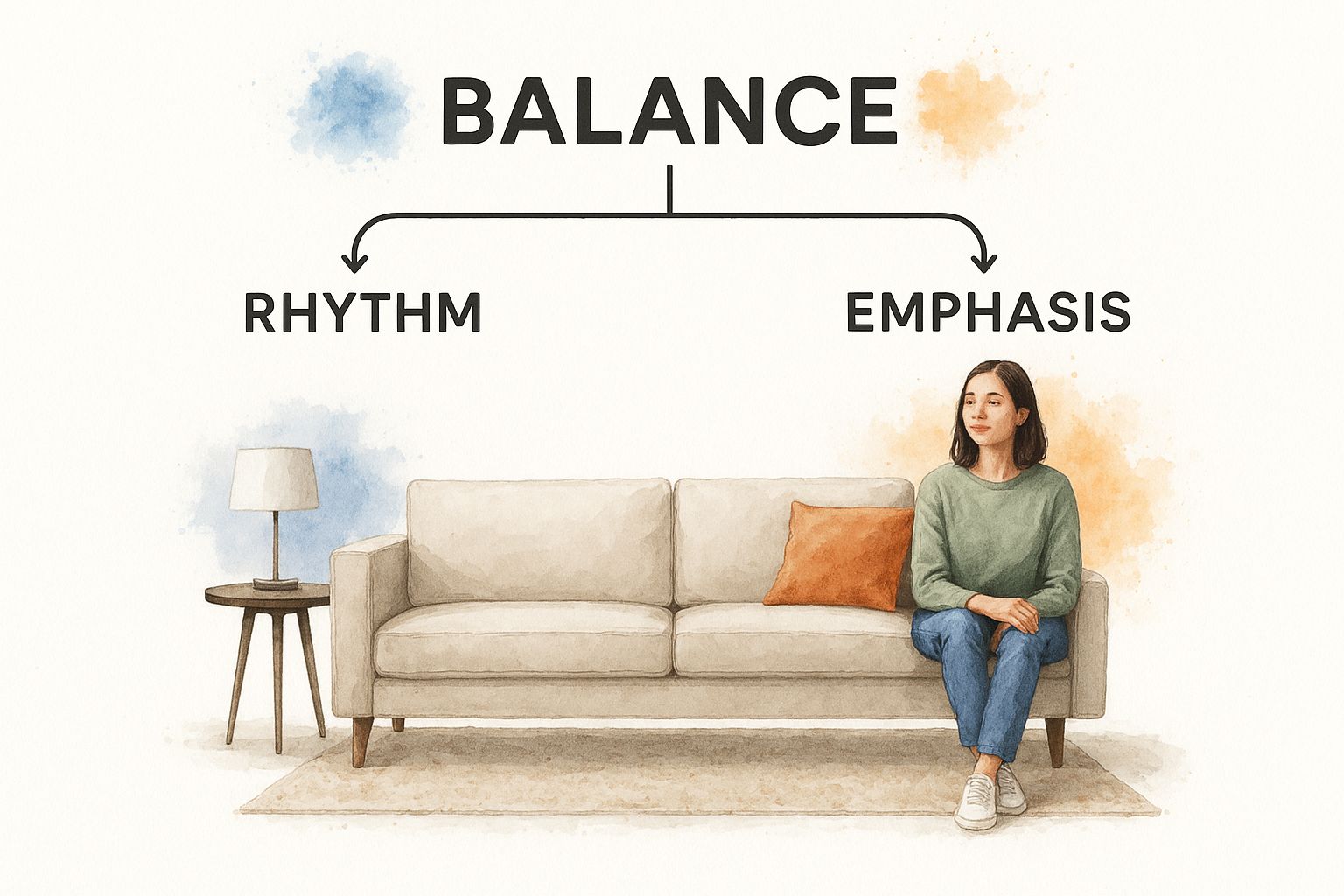
Notice how the arrangement feels harmonious because the visual weight is balanced, while the repeated accent colour helps guide your eye around the room, creating that essential rhythm.
The Other Core Principles Explained
Balance and rhythm are just the start. To really master the art of interior design, you need to understand all seven principles.
This quick table breaks down each one, explaining what it is and how you can start using it in your own home right away.
| Principle | Simple Explanation | How to Apply It |
|---|---|---|
| Emphasis | Creating a main focal point or a "star of the show" in a room. | Make a large piece of art, a dramatic fireplace, or a stunning window the first thing people notice. |
| Contrast | Placing very different elements together to create visual interest. | Pair a smooth, modern table with a rough, natural-fibre rug. Or use dark paint with light-coloured furniture. |
| Scale & Proportion | Ensuring objects in a room relate to each other and the space in size. | Choose a sofa that fits the room—not too big to overwhelm it, and not too small to get lost in it. |
| Harmony & Unity | The feeling that all the elements in the room belong together and work as a team. | Stick to a consistent colour palette and design style to make sure everything "clicks." |
| Details | The small finishing touches that add personality and depth. | Think about the texture of a throw blanket, the style of cabinet handles, or the trim on your curtains. |
Each of these principles plays a vital role. Emphasis gives your room a purpose, while contrast keeps it from feeling boring. Our guide on house painting services in Dubai has some great ideas for using colour to create powerful contrast and emphasis.
Meanwhile, getting Scale and Proportion right ensures the space feels comfortable and functional. Harmony is the ultimate goal, where every element feels connected. And finally, the Details are what elevate a good design into a great one, reflecting your unique personality. When all seven principles are working together, that's when the magic happens.
Finding Your Personal Interior Design Style
Now that you have a handle on the core principles, we get to the fun part: finding a style that feels like you. It helps to think of interior design styles less like strict rulebooks and more like different languages. Each one has a unique way of expressing a personality or telling a story to shape the feel of your home. Finding your style is really about finding the language that feels the most natural to speak.
This isn't about chasing the latest trend or trying to perfectly copy a room you saw online. It’s an exploration—a process of figuring out what makes you feel comfortable, inspired, and truly at home. Let's walk through some of the most beloved styles and break down what makes them tick.
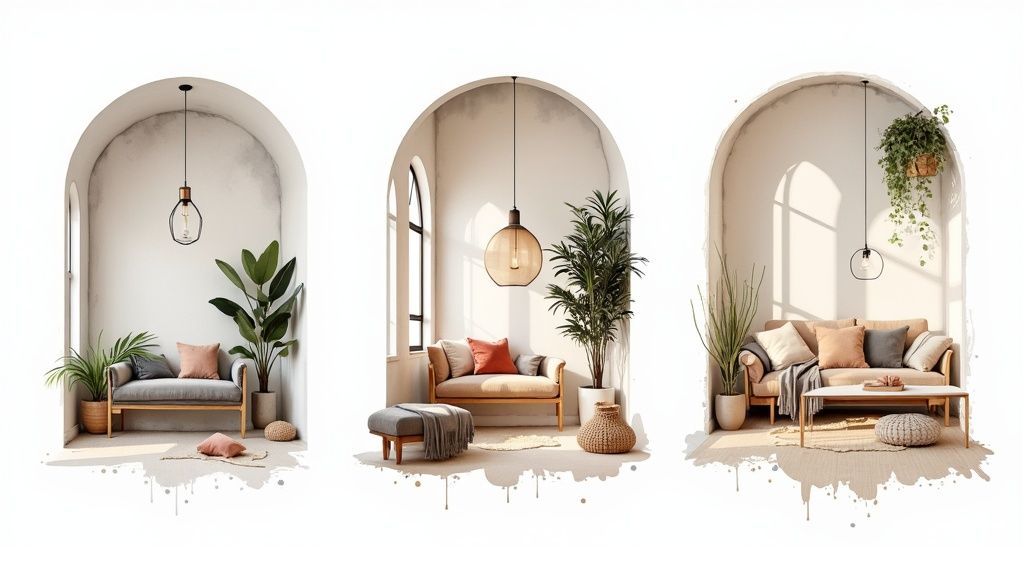
Exploring Popular Interior Design Styles
Let's take a look at the personality behind a few major design approaches. Each one has its own philosophy, using certain colours, materials, and furniture to build a specific mood. Seeing them side-by-side often makes your own preferences click into place.
-
Scandinavian (Scandi): This style is all about creating a bright, calm, and uncluttered sanctuary. It’s built on functionality and simplicity, using light wood tones, white walls, and cosy textiles to bring in warmth. Think clean lines, tons of natural light, and a real appreciation for good craftsmanship.
-
Industrial: Born from old factories and warehouses being turned into living spaces, this style celebrates raw, unfinished elements. It’s defined by things like exposed brick, visible ductwork, weathered wood, and metal fixtures. The whole vibe is a bit edgy, practical, and full of character.
-
Minimalist: People often mistake minimalism for cold or empty, but it's really about being intentional. Every single item in a minimalist room has a purpose and a place. The colour palette is usually very controlled and neutral, putting all the focus on clean lines, simple shapes, and lots of open space.
-
Bohemian (Boho): Free-spirited and wonderfully eclectic, Boho is a joyful mash-up of patterns, textures, and colours from all over the world. It’s a layered, personal style filled with vintage finds, handmade pieces, and plenty of lush plants. There are very few rules here—it's all about creating a space that feels deeply and uniquely you.
How to Identify Your Own Aesthetic
Do you feel pulled toward more than one style? That’s totally normal. In fact, most people discover their personal taste is a blend of two or three. The trick is to spot the common threads that connect the looks you love.
A great way to start is by creating a mood board. Use Pinterest, tear pages from magazines, or just save screenshots of rooms that make you feel something. Don’t overthink it at first; just gather images that catch your eye. Before long, you'll start to see patterns emerging.
Are you consistently saving images with neutral palettes and clean lines, or do vibrant colours and bold patterns fill your board? This visual audit is the most powerful tool you have for discovering your authentic style.
Once you have a clearer idea, you can begin to experiment. A simple update can have a huge impact. For instance, you could give a dated side table an industrial feel by wrapping it in a metallic finish, or bring in a touch of Boho with some new textured cushions. Even small changes to your existing pieces can shift the entire mood of a room. To learn more about how easily you can transform surfaces, check out our guide on furniture wrapping.
Translating Style into Your Space
Once you’ve zeroed in on a style—or a unique mix—that feels right, you can start bringing it to life in your home. This is where you get to play with the specific ingredients that define your chosen aesthetic.
Think about these key components for any design:
- Colour Palette: What colours are the foundation of the style? Scandinavian design leans on whites, greys, and pale woods, while Boho embraces rich, earthy tones.
- Key Materials: What textures do you see again and again? Industrial style loves raw metal and brick, whereas minimalism often favours smooth concrete and glass.
- Furniture Shapes: Look at the silhouettes. Are they sleek and low-profile like in Mid-Century Modern, or more ornate and detailed like you’d see in traditional styles?
At the end of the day, remember that your home should be a reflection of you. Use these styles as a jumping-off point, a framework to build on. The very best interior design is personal, so don't be afraid to mix things up, break a few "rules," and create a space that is perfectly, beautifully yours.
Exploring What’s Happening in Interior Design Right Now
While the fundamental principles give us a solid foundation, the world of interior design is anything but static. It’s always changing. Today's trends feel less like passing fads and more like a direct response to how we actually live, with a big focus on connection, flexibility, and making more conscious choices.
These aren't just aesthetic preferences; they signal a real shift in what we expect from our homes. Let's dig into the three major movements that are shaping interiors today.
The Rise of Biophilic Design
One of the most powerful trends right now is biophilic design. It’s a fancy term for a simple idea: bringing the outdoors in. The whole concept is built on the belief that we have an innate need to connect with nature, and when we do, it has a measurable impact on our wellbeing, creativity, and overall happiness.
But this is about so much more than just scattering a few potted plants around. It's a thoughtful integration of the natural world into our homes.
- Natural Light: Thinking about how to maximise sunlight with large windows, skylights, or even just sheer curtains to create bright, airy spaces.
- Natural Materials: Using materials that feel good to the touch, like wood, stone, bamboo, and rattan, to add organic texture and warmth.
- Views of Nature: Arranging a room so the focal point is the view of the garden, a tree, or the sky.
- Earthy Colour Palettes: Drawing inspiration from nature's colour scheme—think greens, blues, and earthy browns—to build a calming, grounded atmosphere.
Spaces That Do It All
Let’s be honest, our homes are working harder than ever. A single room might need to function as a home office, a gym, and a classroom all in one day. This has created a huge need for multi-functional spaces that can pivot from one activity to the next without a fuss.
The secret to a great multi-functional room is smart, flexible design. It's about choosing furniture that can pull double duty, like a dining table that also works as a desk or a storage ottoman that provides extra seating when guests come over. The idea is to create distinct "zones" within a single room, using things like area rugs or clever furniture placement to define different areas without having to put up walls.
The modern home is a hardworking home. The goal of multi-functional design isn’t to cram more stuff into a room, but to make the space work smarter for the people living in it.
This trend is especially visible in places like the UAE, where a fast-moving real estate market is pushing homeowners to invest in clever interior upgrades. Residential projects already make up over 57% of the UAE's interior design market, and with median villa prices jumping 20% in 2024, property owners are motivated. They're creating flexible, high-value interiors to attract premium buyers and renters in a market that's on track to hit USD 2.84 billion by 2030. You can see more data on the UAE's evolving interior design market in this report from Mordor Intelligence.
Sustainability as the New Premium
Perhaps the most significant trend of all is the move toward sustainable and conscious design. Today, real luxury isn't about slapping a brand name on everything; it's about making thoughtful choices that are kinder to our planet. People are actively looking for ways to refresh their homes without the waste and environmental headache of a full demolition.
This is where smart, sustainable solutions are really shining. Instead of tearing out perfectly good kitchen cabinets or replacing a dated countertop, homeowners are choosing to upcycle what’s already there. Architectural wraps, for example, let you completely transform surfaces with stunning, high-end finishes—think rich wood, elegant marble, or sleek metal—without sending anything to the landfill.
It’s really the best of both worlds. You get a premium, custom look while keeping the existing structures in place. It’s a clean, efficient, and forward-thinking way to bring a design vision to life, proving that a beautiful home and a healthy planet can definitely go hand in hand.
Bringing Your Design Vision to Life
All the inspiration in the world is fantastic, but the real magic happens when you start turning those ideas into a space you can actually live in. This is where your vision jumps off the mood board and into reality. It’s the hands-on part of the process, and honestly, it’s often a lot easier and less messy than most people imagine.
Let's shift from theory to action and walk through how a real transformation unfolds, using a common design challenge as our guide. This helps break it all down, showing how smart, modern methods can give you that high-end finish you're after.
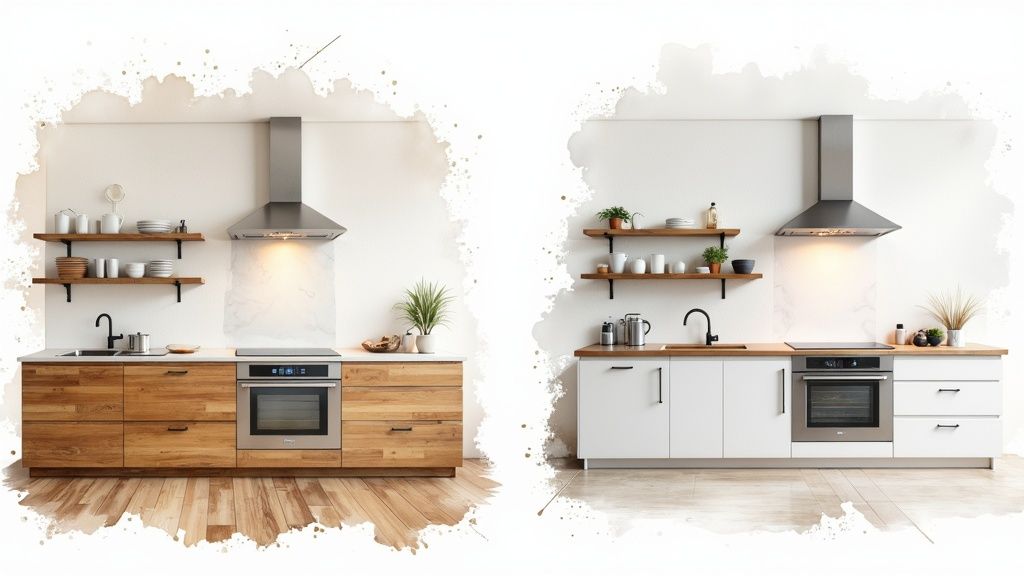
A Case Study in Transformation
Picture this: a kitchen that's perfectly functional but stuck in the past. The layout works, the appliances are fine, but the cabinets are that unflattering orange oak that screams another decade. For years, the only solution seemed to be a full-blown demolition—a dusty, disruptive, and expensive ordeal.
But what if you could get a complete aesthetic overhaul without any of that? This is where a modern approach to interior design really shines by focusing on upgrading what you already have. Architectural wraps are a perfect example of this philosophy in action.
Instead of ripping out perfectly good cabinets, a high-quality wrap can be applied right over the existing surfaces. That tired kitchen can be completely reborn in just a few days with a finish that looks and feels like solid wood, sleek matte black, or even a sophisticated marble.
The goal of modern interior design isn't always to replace; it's to reimagine. By working with the existing structure, you minimise waste, save time, and can achieve a stunning, high-end result that is both sustainable and cost-effective.
The Steps to a Seamless Refresh
This type of project follows a clear, straightforward path from vision to completion, making high-impact design accessible to everyone.
- Define the Vision: Always start with the end in mind. What's the goal? For our kitchen example, the aim is to create a modern, sleek look. The chosen finish might be a deep matte navy or a light, textured wood grain.
- Select the Right Materials: This step is crucial. You want to choose high-quality architectural wraps that are durable, easy to clean, and have a realistic texture. The right material makes all the difference, ensuring the final result feels premium and lasts.
- Prepare the Surfaces: A flawless finish is all in the prep work. The existing cabinet doors and drawers are thoroughly cleaned and primed to ensure the wrap adheres perfectly. This creates that seamless, factory-finish look.
- Expert Application: A skilled professional then applies the wrap, meticulously moulding it around every edge and corner. This is where true craftsmanship comes in, resulting in a transformation that is virtually indistinguishable from a brand-new installation.
This approach isn't just for kitchens, either. It can be used to update tired wardrobes, refresh bathroom vanities, or even create a stunning feature wall. Our guide on vinyl wall coverings dives into how this same principle can be applied to walls for a truly dramatic effect.
A Growing Market for Smart Design
This focus on clever, efficient upgrades is especially relevant in booming construction markets. Saudi Arabia, for example, is a powerhouse in the GCC interior design market, thanks to ambitious projects under its Vision 2030 plan. In 2022, the nation was responsible for about 35% of the MENA region's project contracts, creating a huge demand for interior design services in new hotels and residential buildings. As the market grows, so does the appetite for innovative solutions that deliver high-end, culturally relevant styles without the long timelines of traditional methods.
Common Interior Design Questions Answered
Jumping into an interior design project is exciting, but let’s be honest, it almost always brings up a few questions. Feeling a little stuck on where to start or how to handle common roadblocks is completely normal. This section is all about giving you clear, straightforward answers to the things people wonder about most, so you can move forward with confidence.
Where Should I Start with My Interior Design Project?
Starting a new project can feel like staring up at a huge mountain. The secret? Break it down. Focus on inspiration and function before you even think about buying a single thing.
The absolute best place to begin is by gathering ideas. Create a mood board—this could be a physical corkboard or a digital one on a platform like Pinterest. Just start collecting images of anything that makes you stop and stare, whether it’s a colour palette, a cool texture, a specific chair, or a whole room.
Once you have a good collection going, step back and look for the patterns. Are you consistently drawn to clean lines and muted colours, or do you keep pinning bold patterns and rich, saturated tones? This will start to give you a real sense of your personal style. Next, think about function. Seriously, how are you going to use this space day-to-day? Answering that one question will guide your layout and furniture choices far better than any passing trend. Finally, set a realistic budget. It’s not the fun part, but it’s what helps you decide where to splurge and where to save.
How Can I Make a Small Room Look Bigger?
Making a small space feel bigger is a classic design challenge. Luckily, there are a few tried-and-true tricks that designers have been using for years to make a room feel open, airy, and way more spacious than it actually is. It all comes down to cleverly playing with light, colour, and scale.
The key to making a small room feel bigger isn't about getting rid of stuff; it's about making smart, intentional choices that trick the eye into seeing more space.
Start with your walls. Lighter colours are your best friend here, as they reflect light and make the room feel less closed-in. Then, do everything you can to maximise natural light. If you have heavy, dark curtains, swap them out for something sheer that lets the sun pour in.
Here are a few more simple but powerful techniques:
- Use Mirrors Strategically: This is the oldest trick in the book for a reason. Placing a large mirror on a wall opposite a window will literally double the amount of light in the room and create an incredible illusion of depth.
- Choose Furniture with Legs: When you can see the floor under a piece of furniture, the whole room feels more open. Opt for sofas, armchairs, and tables that are raised on visible legs.
- Declutter with Purpose: A clean, organised room will always feel larger than a cluttered one. Be a little ruthless with what you keep and make sure every single item has a home.
By layering these strategies, you can turn a cramped room into a welcoming retreat that feels both comfortable and expansive.
What Is the Difference Between Interior Design and Decorating?
This is easily one of the most common points of confusion in the design world. People use the terms interchangeably all the time, but they actually refer to two very different disciplines.
Think of it like this: an interior designer is like an architect for the inside of a building. They’re focused on the big picture—the bones of the space. They plan layouts, figure out lighting schemes, select structural materials, and make sure everything meets building codes. Their job is all about the science of how a space functions and feels.
An interior decorator, on the other hand, comes in to furnish and beautify an existing space. Their expertise is in the finishing touches that bring a room to life. They’re the ones selecting paint colours, furniture, fabrics, and accessories to make the space aesthetically pleasing and reflect the owner’s personality. Both are creative, but design is about shaping the space itself, while decorating is about dressing it.
How Can Sustainable Solutions Fit into a High-End Design?
For a long time, "luxury" meant rare, new, and often very expensive materials. But that old-school definition is changing. Today, modern luxury is much more about making smart, conscious choices. Sustainability isn't some niche concern anymore; it’s becoming a hallmark of thoughtful, high-end design.
Premium design is now being defined by its cleverness and its consideration for the planet. It’s about getting that bespoke, luxurious look while being mindful of a project's footprint. This is where upcycling and refinishing have really come into their own.
Architectural wraps are a perfect example of this new mindset. They let you completely transform existing surfaces—from kitchen cabinets and wardrobes to walls and furniture—with incredibly realistic premium finishes. You can get the look of exotic wood, sophisticated marble, or brushed metal without the environmental cost of tearing out the old and sourcing new raw materials.
This approach really gives you the best of both worlds: maximum aesthetic impact with a minimal environmental footprint. That’s exactly what today’s premium interior design is all about.
Ready to bring your own design vision to life with a smart, sustainable, and stunning solution? ReVamp Wrap specializes in transforming interiors with minimal disruption. Discover how our architectural wraps can refresh your space without the mess and expense of a traditional renovation. Explore the possibilities at https://revampwrap.me.